

Foundation-to-Practice Readiness Training: The Hospital Organizes the April “Three Fundamentals” Training Program and Emergency Response Drill, Contributing to Strengthening the Healthcare Safety Line.
To further strengthen the professional foundation of the healthcare team, enhance emergency response capabilities, and improve interdisciplinary coordination in the treatment of critically ill patients, the afternoon of April 15, 2026, our hospital’s Medical Affairs Department carefully organized the April 2026 “Three Fundamentals” training program and clinical emergency response drill. The program was implemented around two core topics: “Consolidating theoretical knowledge and professional skills” and “Testing emergency procedures in real-life scenarios.” All doctors, nurses, technicians, and pharmacists in the hospital (except on-duty staff) actively participated, creating an enthusiastic learning atmosphere with the spirit of “learning knowledge – practicing skills – improving expertise.”
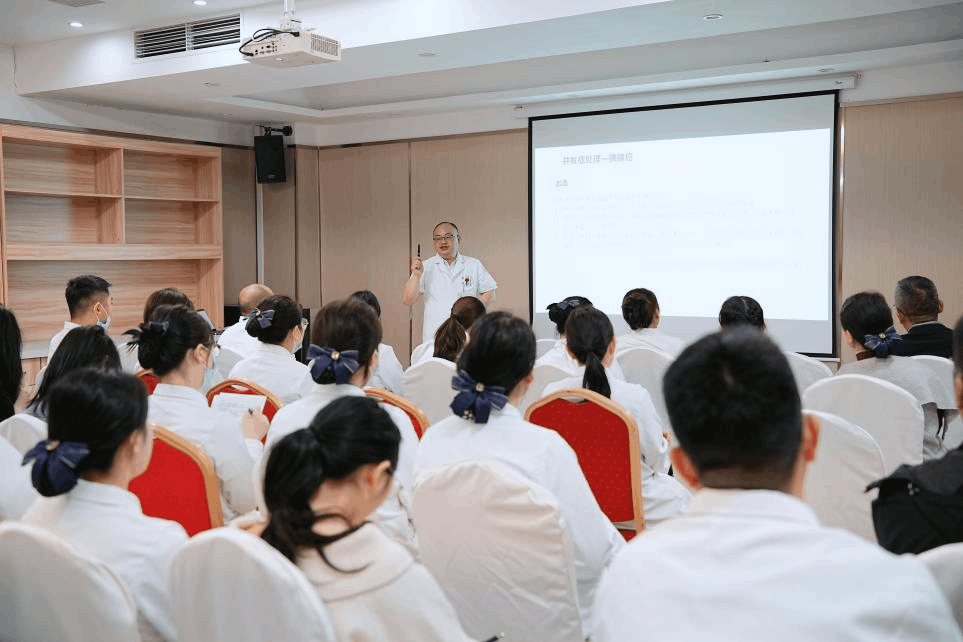
Training promotes learning and firmly consolidates the foundational “Three Fundamentals” skills
The “Three Fundamentals” training is an important foundation for ensuring quality and medical safety. In the hospital conference room, the month’s “Three Fundamentals” training program was carried out as scheduled.
This training program closely aligned with actual clinical needs and featured rich, practical content, including:
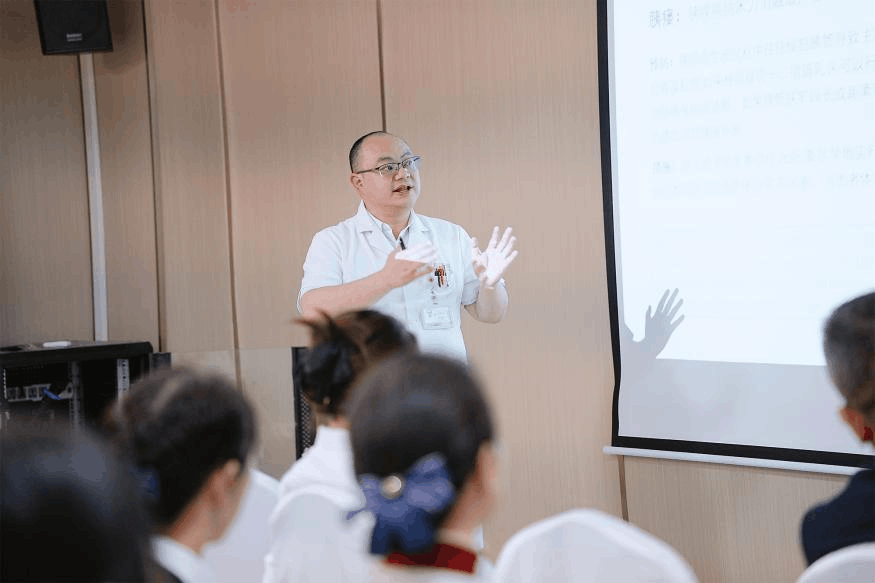
“Key Points in Emergency Management of Complications from Nano-Knife Surgery in Patients”: presented by Wu Chaobo, Chief Physician of Ward Area 2. The lecture focused on systematically organizing and guiding management strategies for complications that may arise from new surgical techniques and methods, thereby enhancing healthcare staff’s ability to anticipate risks and perform emergency management.
“Key Points in Handover of End-to-End Services for Surgical Patients”: presented by Huang Yan, Head Nurse of the Operating Room. The content focused on ensuring patient safety during the perioperative period, while standardizing in detail the service process and handover items at each stage before, during, and after surgery, so as to ensure seamless and continuous coordination throughout the entire treatment process.
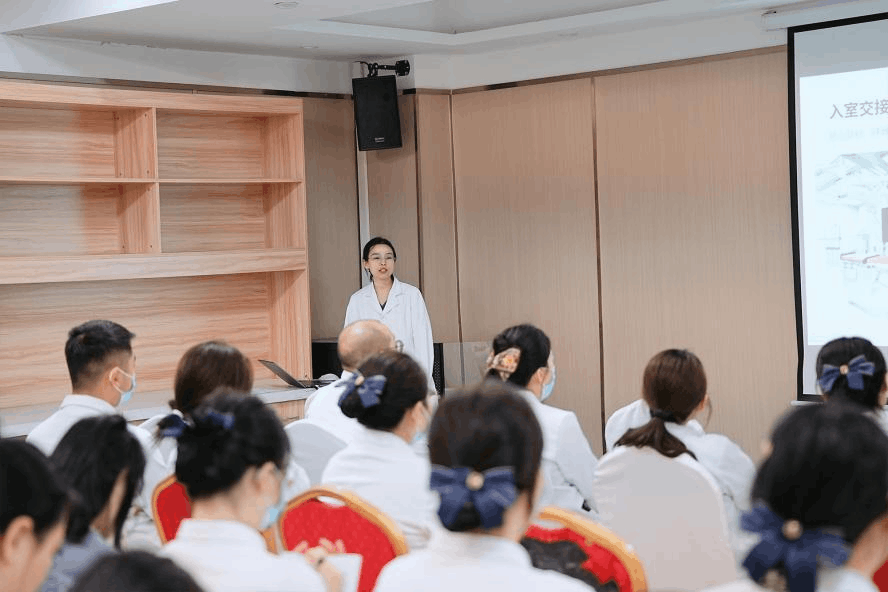
Everyone said that the course covered both risk prevention for advanced techniques and reinforcement of basic skills, providing great guidance for daily work and emergency care.
Putting practice first – Testing emergency capabilities under real conditions
Immediately after the theoretical training session, the hospital organized an emergency response drill closely simulating real clinical scenarios in the Department of Medical Imaging. The drill recreated multiple sudden emergency situations to assess rapid detection capability, MDT coordination capability, and the hospital’s overall emergency response capacity in managing critically ill patients, such as iodinated contrast media-induced anaphylactic shock or postoperative tension pneumothorax…
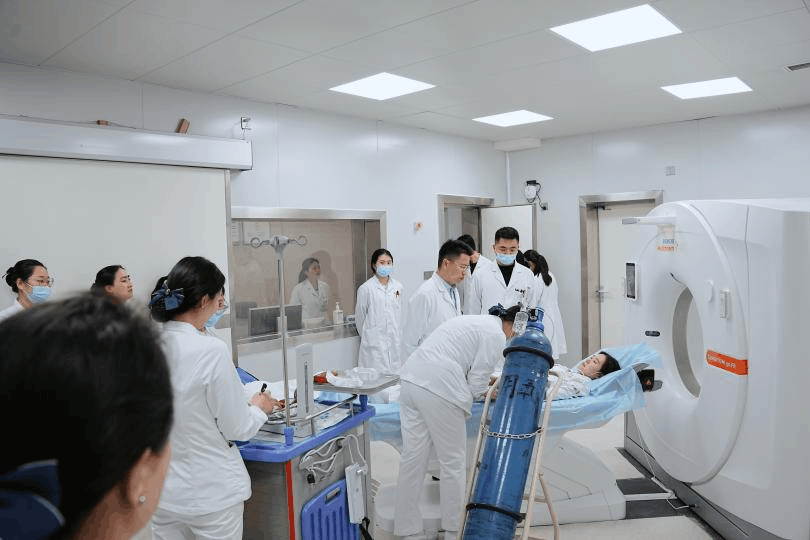
During the drill, the Department of Medical Imaging was the first to detect changes in the patient’s condition and immediately activated early emergency response while promptly requesting support from the ward; the Ward Area 1 emergency team arrived at the scene at once and worked in coordinated synchronization with the Departments of Anesthesiology and Procedural Surgery, Laboratory Medicine, Pharmacy, Functional Testing, and many other departments to sequentially complete patient assessment, emergency treatment, medication-based resuscitation, and paraclinical examinations in an orderly manner. The entire drill proceeded urgently yet in an organized fashion, with seamless coordination among all steps, thereby fully verifying the smoothness of the emergency procedure and the effectiveness of the interdisciplinary coordination mechanism.
After the drill concluded, the Medical Affairs Department organized a review and summary with the participating departments, identifying weaknesses/limitations related to details such as equipment, medications, and interdepartmental coordination, thereby accumulating valuable experience for further optimizing the emergency response process.
Safety is the foundation, quality is the lifeline
A training session, a drill, is also a realization of the commitment to medical safety. Our hospital always places patient safety first. Through the regular implementation of “Three Fundamentals” training programs and emergency response drills closely aligned with real practice, we continuously hone the solid skills of our healthcare staff while improving the interdisciplinary coordination mechanism.
A training session, a drill, is also a realization of the commitment to medical safety. Our hospital always places patient safety first. Through the regular implementation of “Three Fundamentals” training programs and emergency response drills closely aligned with real practice, we continuously hone the solid skills of our healthcare staff while improving the interdisciplinary coordination mechanism.
In the future, UNI-ASIA Cancer Hospital Chengdu will continue to rely on its strong professional capabilities and efficient emergency response system to provide patients with increasingly safer, higher-quality, and more human-centered medical services!